
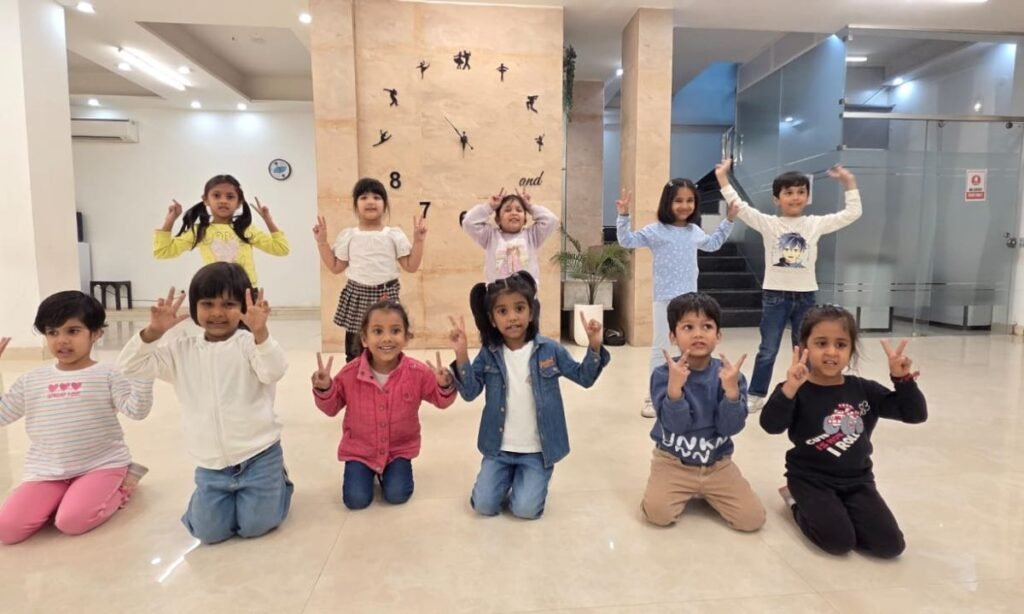
Dance – The Heartbeat of a Happy Childhood
Have you ever noticed how a child instinctively starts moving when music begins to play? That natural rhythm, that sparkle in their eyes, the innocent twirl of joy — it’s something magical. Dance is not taught in those moments; it’s felt.
At The Marun Choreography, we’ve seen countless children transform through dance — shy kids who open up, restless ones who find calm, and confident ones who learn humility through grace. The Role of Dance in a Child’s Upbringing is not limited to steps, beats, or performances. It’s a journey that strengthens the mind, nurtures emotions, builds discipline, and spreads pure happiness.
In this article, let’s explore how dance plays a decisive role in shaping a child’s emotional, physical, and social development — and how it can help your child grow into a confident, graceful, and well-rounded individual.
Dance Helps in Emotional Expression and Mental Growth

Children feel deeply but often don’t have the words to express what they’re going through. Whether it’s happiness, nervousness, or frustration, children’s emotions are raw and pure. Dance becomes their language — a bridge between feelings and expression.
When children dance, they release bottled-up emotions. The rhythm of the music helps them channel their energy, while movement allows them to communicate freely. Over time, they develop emotional intelligence — they begin to recognise and manage their feelings better.
In a world that’s becoming increasingly digital, dance helps children reconnect with their inner selves. It teaches mindfulness — being present in the moment, aware of every movement, every beat. This reduces anxiety, builds self-confidence, and improves mental focus.
Many parents in Dwarka have shared how their children became calmer and happier after joining our classes. Dance acts as emotional therapy, giving children a safe space to express without fear of judgment or comparison.
In essence:
- Dance helps children process emotions they cannot express verbally.
- It builds mental resilience and a positive mindset.
- It reduces stress and increases happiness by releasing endorphins.
The result? A more emotionally balanced, confident, and cheerful child — ready to take on life’s challenges with a smile.
Dance Improves Physical Health and Coordination
In the era of smartphones and video games, many parents worry about their children’s physical activity. Dance offers a perfect, enjoyable alternative — a combination of fun, fitness, and freedom.
When your child learns to dance, every movement improves their motor coordination and body awareness. They start to understand rhythm, timing, and posture — not just for dance, but in their everyday life.
Children who dance regularly tend to have:
- Better muscle tone and flexibility
- Improved cardiovascular health
- Enhanced stamina and agility
- Better posture and balance
Unlike repetitive gym exercises, dance keeps things interesting. Kids look forward to each session because it’s playful and energetic. Whether they’re doing Bollywood, hip-hop, or contemporary, they’re moving their entire body — improving strength, balance, and coordination naturally.
The Role of Dance in a Child’s upbringing is vital — it keeps them active without making it feel like a chore. In addition, physical activity through dance strengthens the immune system and promotes healthy growth.
For growing children, developing both fine and gross motor skills early can make a lasting difference. Dance helps with that — all while keeping them joyful and motivated.
Dance Builds Confidence and Social Skills
Confidence is one of the most beautiful gifts you can give your child — and dance is one of the most natural ways to nurture it.
When children perform on stage or even in front of their peers, they experience something magical: the courage to express themselves openly. That confidence doesn’t stop at the studio door — it reflects in school presentations, friendships, and even the way they speak or walk.
At The Marun Choreography, we have seen shy children blossom through dance. The moment they master a routine, their body language changes. They stand taller, smile wider, and carry themselves with pride.
In group dance sessions, children also learn essential social skills. They understand teamwork, coordination, and patience. They learn to appreciate others’ efforts and contribute collectively towards a shared goal — whether it’s a performance, competition, or simple classroom routine.
Here’s what dance teaches socially:
- How to communicate through body language.
- Respecting personal and group space.
- Handling mistakes gracefully.
- Building empathy and encouragement for others.
Dance makes children realise that everyone shines in their own time — a lesson that helps them develop kindness and respect, both inside and outside the classroom.
Dance Nurtures Creativity and Imagination
Every child is born creative — but often, school routines and daily schedules leave little space for imagination. Dance revives that creative spark.
Through movement, children learn storytelling. They imagine themselves as heroes, animals, or even elements of nature. In every routine, they create their own world — full of expression, colour, and life.
Creativity in dance is not just about inventing steps; it’s about learning how to feel music, interpret rhythm, and add one’s personal touch to every move. That’s what helps children think beyond instructions, take initiative, and become innovators in whatever they do later in life.
Cognitive benefits include:
- Enhanced memory and focus while remembering choreography.
- Better pattern recognition through rhythm.
- Improved problem-solving through movement improvisation.
- Development of both left (logic) and right (creativity) brain hemispheres.
Dance also encourages individuality. Each child finds their unique rhythm — and once they do, it boosts their self-esteem and emotional expression.
As parents, you’ll see this creativity flow into other areas too — art, communication, and academics. The beauty of dance is that it teaches without forcing — it’s a natural, effortless path to growth.
Dance Instils Discipline and Focus
Behind every graceful movement lies hours of consistent practice. That’s where discipline enters the picture.
At first, children might find dance purely exciting. But as they continue, they begin to take on responsibility — attending classes on time, remembering choreography, rehearsing at home, and respecting their instructors. Slowly, this becomes part of their personality.
Discipline doesn’t mean rigidity. It means commitment and persistence — qualities that extend to their academics and other interests. A child who learns to focus during a dance session naturally develops a better attention span in school.
Dance teaches focus in subtle ways:
- Keeping up with the music’s timing.
- Synchronising movements with others.
- Remembering sequences and transitions.
- Staying consistent even when they make mistakes.
And because children enjoy dancing, discipline doesn’t feel forced. They learn to love the process, which is the healthiest way to cultivate consistency.
At The Marun Choreography, our classes are structured to maintain this balance — fun, yet focused; joyful, yet mindful. Parents often tell us their children become more organised and self-aware after joining. That’s the power of dance discipline — it teaches life lessons beautifully disguised as rhythm.
Dance Connects Children with Culture and Values
In India, dance is not just performance — it’s tradition, storytelling, and celebration. From classical forms like Bharatanatyam and Kathak to Bollywood and folk, each style carries centuries of culture and philosophy.
Introducing children to dance connects them deeply with their roots. They begin to understand the meaning behind gestures, costumes, and rhythms that reflect India’s rich heritage. It nurtures a sense of pride and belonging.
At The Marun Choreography, we blend traditional and modern styles, allowing children to explore both heritage and innovation. Through cultural dance forms, they learn discipline and respect — bowing before beginning, acknowledging their gurus, and valuing the essence of art.
Dance teaches cultural values such as:
- Respect for elders and teachers.
- Team spirit and humility.
- Celebration of diversity and inclusion.
- Awareness of India’s performing arts.
This connection to culture grounds them. Even in a fast-changing world, they carry forward the elegance and respect that come from understanding one’s roots.
For parents in Delhi and Dwarka, this cultural exposure helps children balance modern aspirations with traditional values — a perfect blend of grace and progress.
Dance Brings Joy, Positivity, and a Sense of Freedom
Sometimes, the best thing you can give your child is the gift of happiness — and dance does precisely that.
Children today face academic pressure, schedules, and expectations that can feel overwhelming. Dance offers an escape — a place where they can just be themselves: no competition, no grades — just rhythm, movement, and joy.
Every beat of music releases endorphins — the “happy hormones.” Children who dance regularly show improved mood, better concentration, and a naturally cheerful personality.
When a child learns to move confidently, it’s not just the body that changes — their mindset does too. They start seeing the world as a place where they can express themselves freely.
Dance creates joy by:
- Encouraging self-expression.
- Building friendships and community.
- Reducing anxiety through physical release.
- Boosting confidence through performance.
That sense of freedom — of moving without fear of judgment — stays with them for life. It’s one of the most potent emotional skills they can carry into adulthood.
Parents often notice that after a few classes, their children start dancing even at home, in front of mirrors, at family gatherings, or during festivals. That’s when you know it’s more than an activity — it’s a part of their being.
Why Parents in Dwarka Choose The Marun Choreography
In Dwarka, Delhi, the Marun Choreography has become a trusted name for parents who want more than just dance lessons — they want meaningful growth for their children.
Our philosophy is simple: Every child is unique, and dance should nurture that uniqueness rather than suppress it. We provide a safe, encouraging, and creative environment where children feel inspired to move, learn, and shine.
Here’s why parents prefer us:
- Personalised attention: Small batch sizes ensure that every child receives individual guidance.
- Trained professionals: Our instructors are not just skilled dancers but patient mentors who understand child psychology.
- Positive environment: We focus on motivation, not comparison.
- Cultural variety: From Indian classical to Bollywood to freestyle, we expose children to diverse styles.
- Performance opportunities: Stage shows and showcases that help kids gain real-world confidence.
Our classes are structured yet flexible, giving each child the right mix of learning, creativity, and joy. Whether your goal is confidence, physical fitness, or artistic expression, our approach ensures every child feels accomplished.
Parents in Dwarka often share that The Marun Choreography feels less like a studio and more like a second home for their kids — and that’s precisely the environment we aim to create.
The Science Behind Dance and Child Development
Science supports what we’ve observed over years of teaching — dance is profoundly beneficial for children’s overall development.
Neurological studies show that when children learn coordinated movements, their brain’s neural pathways strengthen. This leads to better problem-solving, improved academic performance, and faster reflexes.
Psychologists point out that dance enhances self-regulation — the ability to manage emotions and behaviour. Children who dance regularly exhibit higher self-esteem and lower levels of anxiety.
Physiological benefits include improved cardiovascular health, better metabolism, and posture correction, which are crucial during growth years.
In short, dance trains the brain, body, and heart simultaneously. It’s one of the few activities that merge creativity with logic, strength with softness, and individual expression with group collaboration.
Scientific benefits include:
- Strengthened left-right brain coordination.
- Improved cognitive memory and reasoning.
- Increased happiness hormones like serotonin and endorphins.
- Reduced stress levels and better sleep quality.
At The Marun Choreography, we design our classes keeping these scientific aspects in mind — ensuring that dance is both joyful and developmental.
How to Introduce Dance into Your Child’s Routine
Parents often ask us, “When is the right time to start dance classes?” The answer is — the earlier, the better, as long as the child shows interest. Even at age four or five, children can start exploring movement and rhythm.
However, the key is to keep it pressure-free. Let your child fall in love with dance naturally.
Here’s how to get started:
- Observe interest: Notice if your child moves to music or imitates dance steps — that’s your sign.
- Choose the right style: Start with basic freestyle or Bollywood; classical forms can come later.
- Pick the proper studio: Look for a professional yet nurturing environment like The Marun Choreography in Dwarka.
- Keep it consistent: Regular classes help build rhythm and confidence.
- Encourage, don’t enforce: Celebrate small wins — a new step learned or a performance completed.
Final Thoughts: Raising Confident, Creative, and Joyful Children Through Dance
The Role of Dance in a Child’s Upbringing is far more powerful than many realise. It’s not just about learning choreography — it’s about discovering oneself.
Dance strengthens the body, sharpens the mind, and softens the heart. It nurtures confidence, empathy, creativity, and discipline — all essential for success in life.
For parents in Dwarka, Delhi, dance can be a beautiful way to help children grow holistically — balancing modern learning with emotional intelligence and cultural values.
At The Marun Choreography, we’ve witnessed this transformation in hundreds of young dancers. From hesitant first-timers to confident stage performers, every child who joins us finds not just rhythm but identity.
So, if you wish to gift your child something truly meaningful, gift them dance. It’s the art of joy, balance, and self-belief.
🌟 Quick Takeaway
- Dance improves physical health and coordination.
- It nurtures creativity, focus, and self-discipline.
- It builds confidence, empathy, and communication skills.
- It connects children to cultural roots and traditions.
- Most importantly, it makes childhood joyful, expressive, and free.
💬 Ready to Begin?
If you live in Dwarka, Delhi, and are looking for a trusted, professional, and warm environment for your child to learn dance, visit The Marun Choreography.
Let’s help your child grow with rhythm, grace, and happiness.
📍 Join our dance classes in Dwarka today.
🌐 Visit marun.in