A Journey Through Rhythm, Culture & Grace
India is not just a country — it’s a celebration of culture, colours, and emotions. And if there’s one art form that beautifully captures this diversity, it’s dance. From classical styles born in ancient temples to energetic folk performances that ignite festivals, the dance forms of India reflect stories of devotion, joy, and tradition.
If you’ve ever wanted to explore India through its movements, or simply understand which dance form suits your style or personality, this guide will take you through the most beautiful dance forms of India — in a calm, friendly, and insightful way.
At The Marun Choreography, we believe dance is more than performance — it’s an experience. Whether you are preparing for your wedding dance, joining a class to stay fit, or simply exploring your creative side, Indian dance offers a stress-free, joyful way to connect with yourself and with centuries of living heritage.
Introduction: Why Dance Defines India
Dance in India is more than movement — it’s emotion in motion. Every Indian dance form tells a story — whether it’s divine love in Bharatanatyam, the rhythm of the heart in Kathak, or the unfiltered energy of Bhangra and Garba.
For thousands of years, dance has been part of rituals, festivals, and everyday joy. Even today, from weddings in Delhi to festivals in Kerala, music and dance bring people together. When the rhythm starts, conversations pause,e and emotions take over. That’s the magic of the dance forms of India — they don’t just entertain, they express.
At The Marun Choreography, we see this daily. A bride who learns Kathak to perform for her family, a teenager perfecting Bollywood moves for fun, or a group of friends joining a Garba workshop before Navratri — dance gives them confidence, freedom, and connection.
In a city like Dwarka, Delhi, where modern life runs fast, dance offers calmness. It slows the noise, refreshes the mind, and helps you rediscover joy.
Classical Dance Forms of India
Classical dances are the soul of Indian tradition. Rooted in the Natya Shastra and temple traditions, they combine storytelling, rhythm, and spiritual devotion. Each style represents a region, a philosophy, and a unique rhythm of life.
Bharatanatyam – Grace of Tamil Nadu
Originating in Tamil Nadu, Bharatanatyam is considered the oldest classical dance form in India. It uses precise footwork, sculptural poses, and detailed facial expressions (abhinaya).
Every hand gesture (mudra) conveys meaning — joy, sorrow, devotion, or love. Traditionally performed to Carnatic music, Bharatanatyam embodies divine grace.
Today, it’s a popular choice among dance learners in metro cities like Delhi and Chennai because it builds posture, balance, and discipline. At our studio, we often encourage beginners to start with Bharatanatyam to develop refinement and mindfulness.
Kathak – The Dance of Storytellers
Kathak comes from northern India and literally means “storyteller.” It began in royal courts where dancers narrated tales through expressive eyes and rhythmic footwork.
Characterised by graceful spins (chakkars) and ankle bells (ghungroos), Kathak reflects both devotion and romance. It’s fluid and emotional — one moment soft and the next lightning-fast.
For dancers in Delhi and the NCR, Kathak remains a favourite because it offers versatility, blending seamlessly with Bollywood and contemporary forms. Its elegance and rhythm are in perfect harmony.
Odissi – The Temple Dance of Odisha
Odissi is poetry in motion. Originating in the temple sculptures of Odisha, this dance emphasises curved body postures (tribhangi), graceful torso movements, and intricate gestures.
It’s deeply spiritual, often depicting the love between Lord Jagannath and his devotees. Dancers express emotion delicately, so even silence feels musical.
Emphasising the admiration for fine art and sculpture, Odissi becomes a moving masterpiece — a way to connect with ancient artistry while remaining graceful and serene.
Kuchipudi – The Joyful Expression
Kuchipudi from Andhra Pradesh combines dance, drama, and storytelling. Traditionally, performances combined acting and dialogue to create an authentic theatrical experience.
The unique aspect of Kuchipudi is its light-footed movements and the use of props like a brass plate balanced on the dancer’s head. It celebrates joy, devotion, and energy.
Learners who enjoy a blend of acting and dance find Kuchipudi ideal — it’s expressive, lively, and deeply rooted in culture.
Kathakali – The Art of Theatrical Expression
Kathakali from Kerala is the grandest of all — a dance-drama where costumes, makeup, and gestures create a mesmerising spectacle. The face paint alone takes hours, and each colour symbolises a character type — green for heroism, red for anger, black for evil.
Though highly stylised, it teaches the power of expression. Even a raised eyebrow tells a story. Watching a Kathakali performance feels like witnessing mythology come alive.
Manipuri – The Dance of Divine Love
From the hills of Manipur, this dance is soft and spiritual. Inspired by Ras Leela, it portrays the love between Radha and Krishna. Movements are gentle, circular, and graceful — resembling floating lotus petals.
Manipuri costumes — the cylindrical skirt (potloi) and translucent veil — enhance its visual appeal. It’s perfect for those who seek peace and devotion through motion.
Mohiniyattam – The Dance of Enchantment
Mohiniyattam, also from Kerala, translates to “Dance of the Enchantress.” Known for its feminine elegance, it’s performed with soft swaying movements, tender facial expressions, and simple white-gold costumes.
It’s introspective and intensely emotional — ideal for dancers who prefer subtlety and flow.
Sattriya – The Monastic Dance of Assam
Sattriya originated in the monasteries (sattras) of Assam. It combines devotional storytelling with rhythm and music. Earlier performed only by monks, it now welcomes everyone who appreciates sacred art.
Its intricate footwork and elegant hand gestures reflect serenity. For learners, it’s an invitation to explore India’s spiritual traditions through rhythm and prayer.
Together, these eight classical styles form the core of Indian dance heritage — a harmony of devotion, expression, and rhythm that continues to inspire dancers worldwide.
Folk Dance Forms of India
If classical dance is about devotion, folk dance is about celebration. Every region in India has its own style — vibrant, energetic, and spontaneous.
Popular Folk Dance Forms
Bhangra (Punjab)
Originally a harvest dance, Bhangra is pure joy. The beats of the dhol instantly lift your mood. It’s the heartbeat of Punjabi celebrations and now a favourite workout dance across Delhi gyms and studios. At The Marun Choreography, we often include Bhangra elements in wedding choreography because they radiate happiness and togetherness.
Garba & Dandiya (Gujarat):
Performed during Navratri, these dances revolve around Goddess Durga. Garba’s circular rhythm and Dandiya’s stick patterns create a festive atmosphere where everyone can join in. These folk forms teach coordination, energy, and unity — ideal for group performances at weddings.
Ghoomar (Rajasthan):
Known for twirling movements and colourful attire, Ghoomar reflects grace and tradition. It’s a popular choice for bridal or sangeet performances because it combines elegance with grandeur.
Lavani (Maharashtra):
Fast-paced, rhythmic, and expressive, Lavani celebrates womanhood. It’s powerful and confident, set to the beats of the dholki.
Yakshagana (Karnataka):
A dance-drama combining storytelling, singing, and vibrant makeup. It’s theatre on stage — bold, expressive, and captivating.
Chhau (Jharkhand | Odisha | Bengal):
Blending martial arts and mythology, Chhau is visually powerful. The masks, leaps, and dynamic movements make it one of India’s most dramatic folk dance forms.
Each of these styles connects people to their roots. They’re joyous, inclusive, and filled with life — proving that dance doesn’t require perfection, only participation.
Modern & Fusion Dance Styles in India: India’s dance culture has evolved. Today’s dancers experiment with fusion — blending tradition and modernity.
At The Marun Choreography, we see this transformation daily. Our wedding choreographies often mix Bollywood, contemporary, and folk influences, creating performances that feel modern yet soulful.
Popular Modern & Fusion Styles
Bollywood Freestyle:
Perhaps the most popular among youngsters, this style blends classical hand gestures, folk energy, and Western beats. It’s fun, expressive, and instantly connects with audiences. Perfect for wedding dances and festive performances.
Contemporary Indian:
This form merges ballet-like flow with Indian expressiveness. It’s emotional, fluid, and ideal for conveying stories of love, struggle, or hope.
Hip-Hop Fusion:
From street styles to music-video choreography, hip-hop has become the heartbeat of Indian youth. When combined with Garba or Kathak steps, it creates magic — showing how adaptable Indian dance truly is.
Salsa and Latin Blends:
Indian dancers now enjoy experimenting with Salsa and Bachata fused with Bollywood beats, adding international flair to local rhythms.
The best part of these modern dance forms in India is their accessibility. Anyone can learn them regardless of age or experience. The goal isn’t perfection but expression — moving with joy and confidence.
Choosing the Right Dance Form for Rhythm. Choosing a dance style is like choosing an outfit — it should fit your personality and make you feel confident.
Here’s a simple way to decide:
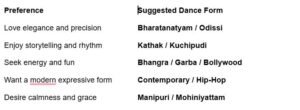
When you find the proper form, dancing becomes effortless. At The Marun Choreography, we help learners explore their comfort zone before committing — ensuring dance feels like joy, not pressure.
Tips for Beginners
Start slow — focus on rhythm, not perfection.
Choose comfortable clothes and an open space.
Warm up and stretch before every session.
Record your progress — small improvements matter.
Most importantly, smile while dancing. It’s your energy that makes the performance memorable.
In Dwarka, Delhi, many people join dance classes after long office hours. The rhythm helps release stress, improve posture, and bring balance to life. Whether you dance once a week or every day, consistency turns movement into meditation.
Why Learning Dance Can Transform Your Life
Dance is one of the few art forms that engages the body, mind, and soul together. It doesn’t just teach you steps — it changes how you feel, how you move, and how you express yourself.
Physical Benefits
Builds flexibility and strength
Improves balance, coordination, and posture
Burns calories, keeping you happy
Enhances stamina and heart health
Unlike gym workouts, dance feels effortless because it’s joyful. That’s why many people in Delhi prefer joining dance classes over traditional fitness routines — it’s fitness with fun.
Mental Benefits
Reduces anxiety and stress
Boosts memory and focus through choreography
Releases endorphins that make you feel good
Encourages mindfulness — living in the moment
After a long day, a few minutes of dancing can transform your mood. At The Marun Choreography, we see students enter tired and leave smiling — that’s the healing power of movement.
Social Benefits
Dance builds community. When you join a class or perform at an event, you connect with people who share your energy. It boosts confidence and helps overcome shyness.
Even corporate professionals and entrepreneurs from Dwarka join our workshops to unwind, meet new people, and feel rejuvenated.
Emotional Benefits
Dance teaches self-expression. Whether you’re celebrating joy or coping with stress, movement becomes your language.
Many brides and grooms preparing for their wedding performances discover something unexpected — dancing together strengthens their bond. It brings laughter, teamwork, and emotional connection.
Final Thoughts
Every dance form — whether it’s the divine grace of Odissi, the charm of Kathak, or the joyful beats of Garba — carries the essence of India’s soul.
Dance isn’t just an art; it’s an experience that connects generations. The dance forms of India remind us that beauty lies in movement and meaning lies in rhythm.
At The Marun Choreography in Dwarka, Delhi, we believe dance is for everyone. You don’t need years of training or stage experience — only a willingness to move. Our classes are designed for comfort, expression, and enjoyment.
When music starts, and your body follows, the stress melts away. You reconnect with your rhythm — that calm, confident version of yourself waiting beneath daily chaos.
So next time you hear a beat, let your feet follow. Don’t think, just dance — because somewhere between rhythm, harmony, rhythm and stillness, you’ll find happiness.
About The Marun Choreography
The Marun Choreography offers:
Professional wedding choreography for couples and families
Group and solo dance classes in multiple Indian and Western styles
Special dance workshops and seasonal bootcamps in Dwarka, Delhi
Whether you dream of performing at your wedding, improving flexibility, or simply learning for joy, our expert instructors make it easy, elegant, and stress-free.
📍 Location: Western Delhi | Serving NCR
🌐 Website: www.marun.in
💬 Discover your rhythm. Discover yourself.
FAQs
What are the most popular dance forms of India?
The most famous dance forms of India include Bharatanatyam, Kathak, Odissi, Kuchipudi, Manipuri, Mohiniyattam, and folk dances like Bhangra, Garba, and Ghoomar.
Can beginners learn Indian dance forms easily?
Absolutely! At studios like The Marun Choreography, beginners start with basic rhythm and posture before moving to complete routines. The key is regular practice and patience.
Which dance form is best for fitness?
Bollywood dance, Zumba, Bhangra, and Garba are fantastic for burning calories while staying cheerful. They combine cardio and rhythm naturally.
Where can one complete and earn certifications in various dance forms in Delhi?
You can learn multiple dance forms of India at The Marun Choreography in Dwarka, Delhi, from classical to modern and fusion styles. Our workshops are designed for people who prefer a premium yet relaxed learning experience.